

Why Animal
Encounters Aren't Ethical.
A close encounter may feel harmless to us. For the animal, it can mean a lifetime of control, training, and forced access.
The Experience Is Built for Us
Animal encounters are designed around what people want to do: touch, feed, ride, photograph, bathe, hold, or stand beside a wild animal. That may feel gentle or educational in the moment. But the experience exists because the animal has been made available for human access.
The ethical question is not whether the visitor enjoyed the encounter or whether the animal appeared calm. It is whether the animal had meaningful choice in participating at all.
When access to an animal becomes the product, the animal’s body, behavior, and daily routine are organized around human demand.
What You Don’t See Behind the Encounter
A short visitor experience can hide a much longer system of control.
Wild animals used in encounters may be trained to tolerate handling, remain in position, approach on cue, or accept repeated contact from strangers. Some are restrained, separated from companions, transported, or managed in ways visitors never see.
An animal who appears calm is not necessarily choosing the interaction. Stillness, compliance, or familiarity with people should not be mistaken for consent.
The question to ask is not simply, “Did the animal seem distressed while I was there?” It is: what had to happen to make this interaction possible in the first place?
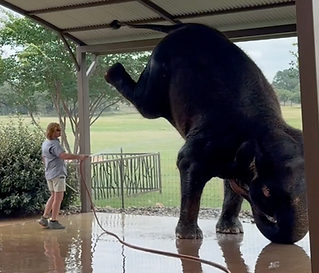
Elephant tricks are ALWAYS unethical.
Common Types of Animal Encounters
Not all animal encounters look the same, but many are built around the same basic idea: the animal is made available for human access.
Common examples include:
-
Rides on elephants, camels, horses, or other animals used primarily for tourist entertainment
-
Bathing or swimming experiences with elephants, dolphins, or other captive wildlife
-
Selfies and posed photographs
-
Petting, holding, or touching wild animals
-
Walking beside animals or participating in staged “bonding” experiences
-
Feeding encounters designed mainly to bring animals close to visitors
-
Painting, tricks, performances, or demonstrations
-
Behind-the-scenes or VIP encounters that sell closer access as a premium experience
Some of these activities may be marketed as educational, therapeutic, enriching, or conservation-focused. The marketing language does not change the underlying question: is the animal being used to create an experience for people?
Educational Does Not Automatically Mean Ethical
Animal attractions often justify close-contact experiences by calling them educational. But learning about an animal does not require touching, riding, bathing, holding, or posing beside them.
In fact, encounters can teach the wrong lesson: that wild animals exist for our access, that calm compliance means contentment, or that conservation depends on getting physically close to animals.
Facilities often describe close-contact programs as educational or call participating animals ‘ambassadors.’
Meaningful education should help people understand an animal’s natural behavior, social life, habitat, and the threats they face in the wild. The animal should not have to perform or surrender control over their body in order for us to learn.
A truly educational experience should leave visitors with greater respect for an animal’s autonomy — not simply a photograph proving they got close.
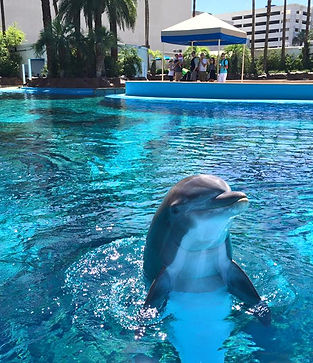
Kids love dinosaurs despite never having interacted with one in a cage.
What Better Experiences Look Like
The best wildlife experiences ask less of the animal and more of the visitor.
Look for opportunities where animals can be observed without being handled, restrained, ridden, posed, or required to interact. Better facilities and responsible wildlife operators allow animals to choose where they go, who they approach, and whether they engage at all.
For captive wildlife, that means prioritizing appropriate social groups, space, privacy, enrichment, and the ability to move away from people. For animals in the wild, it means keeping a respectful distance and avoiding activities that alter natural behavior for the sake of a closer view.
When visiting a sanctuary or rescue facility, independent standards can also help. Organizations such as the Global Federation of Animal Sanctuaries (GFAS) evaluate facilities for animal care, ethical practices, safety, and long-term sustainability. Accreditation is not the only factor to consider, but it can be a useful positive sign.
The less an animal has to do for your experience, the better.
Before You Book an Animal Encounter
Before paying for any wildlife experience, ask a few basic questions:
-
Does the experience involve touching, riding, bathing, holding, posing with, or walking beside a wild animal?
-
Are animals expected to perform, demonstrate trained behaviors, or participate on cue?
-
Can the animals move away from visitors and choose not to interact?
-
Does the facility explain where the animals came from and why they are in captivity?
-
Are animals kept in appropriate social groups and environments for their species?
-
Is the organization transparent about breeding, transfers, and long-term care?
-
If the facility calls itself a sanctuary, is it accredited or verified by GFAS, or does it clearly follow comparable standards?
A good rule of thumb is simple: the more an experience depends on direct access to the animal, the more carefully you should question it.
