
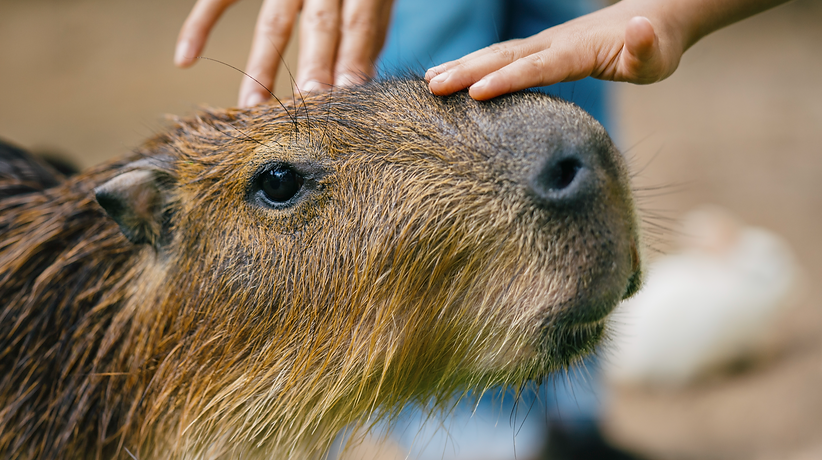
Animal Ambassadors
or Animal Exploitation?
Education is not automatically ethical because a facility calls an animal an “ambassador.”
What Is an “Ambassador Animal”?
Zoos, wildlife attractions, mobile exhibitors, and educational programs often use the term “ambassador animal” for animals who are brought into close contact with the public. They may be handled during presentations, transported to schools or events, used in photo opportunities, or expected to tolerate repeated touching and interaction.
The word ambassador sounds positive. It suggests education, conservation, and connection. But the label tells us very little about the animal’s actual experience.
The more important questions are: What is the animal being asked to do? How often? How much choice does the animal have? And is the experience designed around the animal’s needs—or ours?
Education Doesn’t Require Access
Facilities often defend ambassador-animal programs by saying they help people learn about wildlife, build empathy, or care more about conservation. But education does not require touching, holding, posing with, or closely handling a wild animal.
People can learn about animals by observing natural behavior, listening to knowledgeable caregivers, seeing how animals interact with members of their own species, and understanding the habitats and threats that shape their lives. None of that requires turning an animal’s body into part of the lesson.
Close-contact programs can also teach the wrong thing. When a wild animal is routinely handled, carried into classrooms, placed on laps, or made available for photographs, the message can become that wildlife exists for our access.
Good education should help people respect an animal’s boundaries, not erase them.
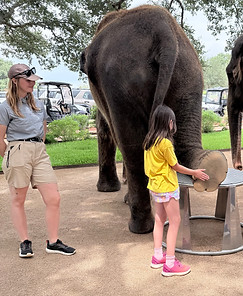
One moment for you, a lifetime of suffering for the animal.
What the Animal Is Asked to Endure
An ambassador program may last only a few minutes for a visitor, but the animal’s participation can involve much more than the presentation itself.
Depending on the program, animals may be transported repeatedly, handled by multiple people, exposed to unfamiliar environments, placed under bright lights or in crowded rooms, restrained for safety, or expected to remain calm while strangers touch or photograph them.
Even when an animal appears relaxed, appearance alone does not tell us whether the experience is voluntary or comfortable. Many captive animals learn to tolerate handling because it is part of their routine—not because they would choose it.
Some species are especially poorly suited to repeated handling, travel, noise, or close contact. And the more frequently an animal is used for public programming, the more important it becomes to ask whether the educational benefit is being prioritized over the animal’s own preferences and welfare.
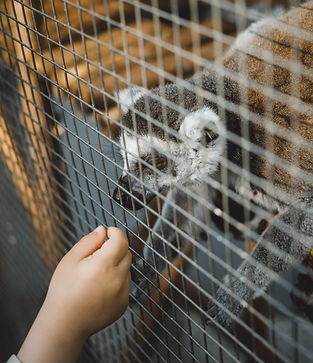
An animal should not have to perform accessibility in order to justify being cared for.
Observation vs. Exploitation
Not every educational program involving captive wildlife is the same. There is an important difference between observing an animal and requiring that animal to participate in a human experience.
A keeper talk, feeding demonstration, or enrichment activity may allow visitors to learn while the animal remains in a familiar environment and retains the ability to move away. By contrast, programs built around touching, holding, posing, transport, or close physical access depend on the animal being available when people want them to be.
That difference matters.
When an animal must be brought out, positioned, handled, restrained, or repeatedly exposed to strangers in order for the program to work, the experience is no longer simply educational. The animal’s participation has become part of the product.
A useful rule is simple: the less an animal has to do for our experience, the better.
Questions to Ask Before Supporting or Participating in an Ambassador Program
Before attending, booking, or donating to a wildlife program, look beyond the word ambassador and ask what participation actually requires of the animal.
Consider:
-
Is the animal touched, held, carried, posed, or passed between people?
-
Is the animal transported off-site for schools, parties, fairs, corporate events, or other appearances?
-
Can the animal choose not to participate or move away?
-
Does the program depend on photo opportunities, petting, selfies, or close physical access?
-
Is the animal expected to perform trained behaviors or remain in a particular position for visitors?
-
How often is the animal used in public programming?
-
Does the facility explain how stress, transport, handling, and retirement from programming are managed?
-
Could the same educational goal be achieved through observation rather than direct access?
A polished presentation and educational language do not answer these questions. The animal’s experience should.
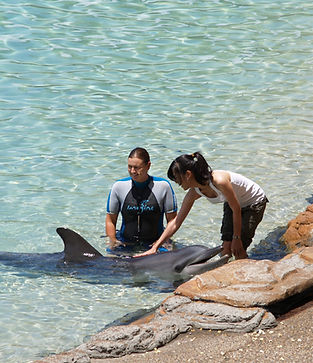
What You Can Do
You do not have to participate in close-contact wildlife experiences to care about animals—or to learn from them.
Choose facilities and programs that prioritize observation, space, social needs, privacy, and the animal’s ability to disengage. Avoid attractions that depend on touching, holding, posing, or repeated handling, even when those experiences are described as educational.
If you encounter an ambassador-animal program that raises concerns, ask questions. Find out how often animals are used, whether participation is voluntary, how they are transported, and what happens when they age out of public programming.
Is a teacher utilizing an ambassador program? Choose a different activity for your child and clearly explain to the teacher and the school why you reject the idea of animal exploitation as education. Need help? We are here to support you.
And when facilities rely on direct-contact experiences, tell them why you are choosing not to participate.